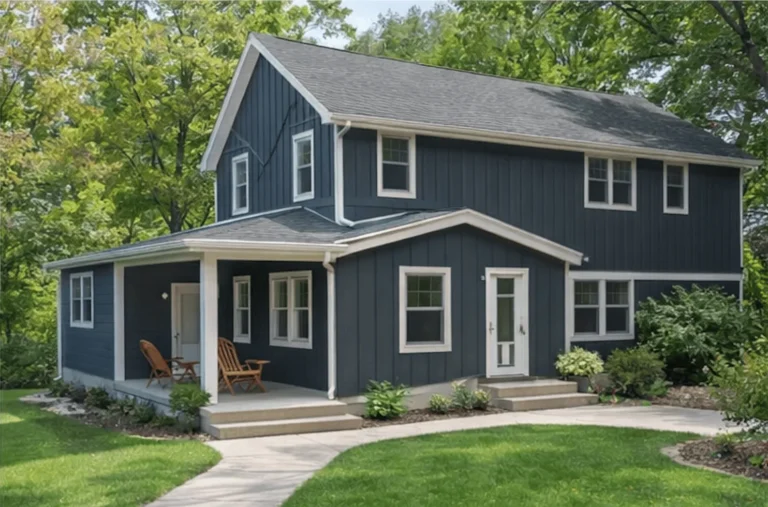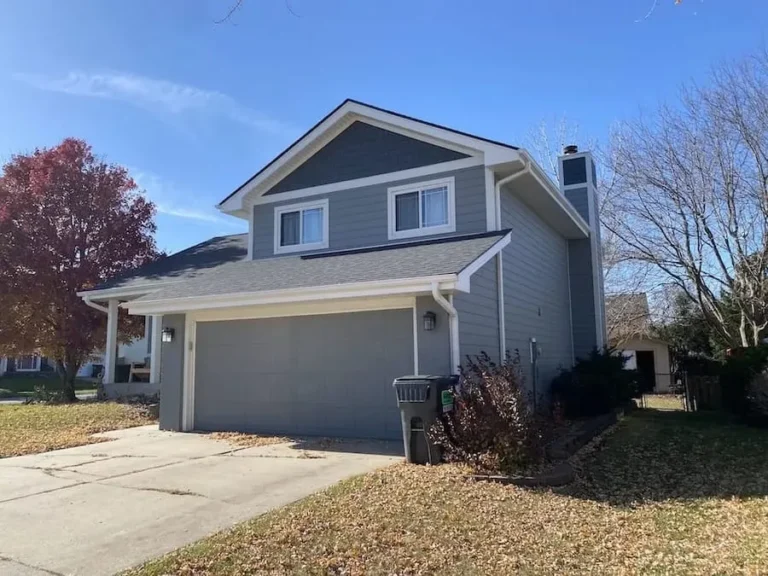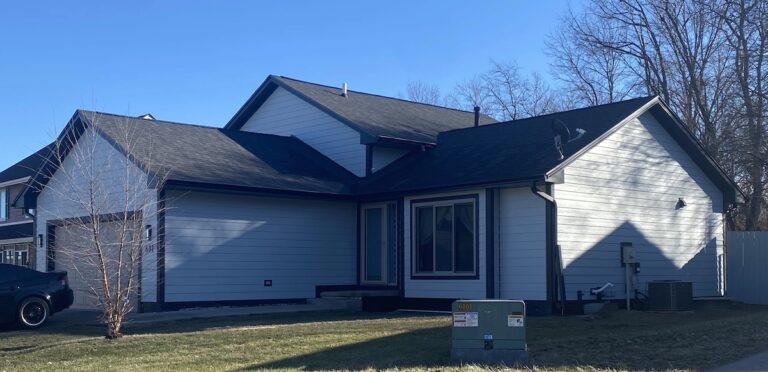
If you have been researching new siding and came across foam-backed options, you are probably wondering whether they are worth the extra cost and whether they will actually improve your home’s energy performance. It is a fair question and the honest answer is more nuanced than most product descriptions suggest.
Jason Handeland, owner of Handeland Construct, has been installing siding across Central Iowa for over eight years. The conversation about thermal performance comes up on nearly every project. What follows is a breakdown of what foam-backed products actually deliver, where the real energy opportunity lives in your home, and how to think through this decision before committing to a specific approach.
Most Homeowners Are Asking the Wrong Question About Insulated Vinyl Siding
When a homeowner brings up foam-backed panels, what they are usually really asking is whether new siding will make their home warmer in winter and cooler in summer. That is a reasonable goal. Iowa winters are demanding and energy costs in older homes can be significant.
The problem is that foam-backed siding is often marketed as the solution to that energy performance issue when in most cases it addresses only a small part of it. The R-value these products add is real but modest. Expecting the siding to meaningfully resolve a thermal performance problem is going to leave most homeowners disappointed when the results do not match the pitch.
That does not mean the siding has no value. It means understanding what it actually does is essential before deciding whether to pay the premium for it.
What Insulated Siding Actually Is and What It Is Not
Foam-backed siding is a standard panel, most commonly insulated vinyl siding, with slight insulation bonded to the back. The foam insulation is typically EPS, which adds a modest amount of R-value to the assembly and gives the siding additional rigidity and thickness.
What it is not is a replacement for proper insulation inside your home’s framing. It adds R-2 to R-4 in most cases. That is a real improvement over an uninsulated section but a fraction of what properly addressed framing delivers.
Insulated siding is also not the same as rigid insulation foam as a continuous board over the sheathing before the siding goes on. Those are two different approaches with different installation requirements, different costs, and different performance outcomes. Understanding the distinction between these elements matters before you spend money on an upgrade that may not solve the problem you are trying to fix.
The Real Insulation Problem Lives Inside the Wall
In most older Iowa homes, the thermal performance problem is not on the outside of the building. It is inside the framing.
Homes built before modern energy codes were often insulated inconsistently. Blown-in material settles over time. Batt insulation from decades ago may have shifted, compressed, or deteriorated. Some sections in older homes have no insulation at all, particularly around corners, above windows, and in areas that were difficult to access during original construction.
Adding foam-backed vinyl siding over framing that has degraded or missing insulation does not fix the underlying problem. It adds modest resistance on the outside while the real energy loss continues through the home’s structure from the inside out.
The honest upgrade most Iowa homeowners need is better insulation inside the framing, not backing on siding panels. That conversation is worth having before committing to a siding upgrade budget.
When Insulation Makes Sense
There are situations where adding insulation as part of a siding project makes genuine sense. Understanding when exterior insulation would be the right approach helps homeowners make a better decision.
Eliminating thermal bridging
Wood framing conducts heat. In a standard assembly, the studs themselves create pathways for heat to move through the structure even when the spaces between them are fully insulated. A continuous stiff foam board over the sheathing breaks that thermal bridge across the full surface. This is a genuine performance benefit that foam-backed siding only partially address.
Uneven exterior surfaces
Standard vinyl siding can look wavy when placed over surfaces that are not perfectly flat. The siding insulation backing helps bridge minor irregularities and produces a flatter more uniform finished appearance. For homeowners whose exterior has minor variations this is a real practical benefit beyond the thermal value.
Adding R-value without interior disruption
In some older homes where the interior is not being touched and the framing cannot be easily accessed for upgrades, adding rigid foam to the exterior during a siding project is one of the few practical ways to improve overall thermal performance without significant interior disruption.
New construction or major remodels
On a new building or a project where the exterior is already being fully opened up, the cost difference between adding a continuous layer and not adding one is relatively modest compared to the long-term performance benefit.
The Best Time to Improve Insulation Is When the Siding Comes Off
This is one of the most important points Jason makes to homeowners considering a siding project. When the old siding comes off, the home’s exterior framing is exposed. That exposure is a one-time window to address thermal and air sealing issues that would otherwise require significant disruption to access.
Once new siding goes back on, that window closes. The same exterior that had a chance to be properly insulated goes back to performing the way it always has, just with a new surface over it.
What that window allows:
- Inspecting the existing insulation and identifying gaps, compression, or missing sections
- Adding blown-in material through the now-exposed sheathing into framing areas that are underperforming
- Air sealing at penetrations, rim joists, and transitions before the new siding system goes on
- Installing house wrap that integrates correctly with window and door flashing before siding installation begins
- Adding a continuous foam board over the sheathing if the project scope and budget support it
Jason sees this opportunity go unused regularly on siding projects where the homeowner focused entirely on the siding choice and never considered what could be addressed while the exterior was already open. A few additional hours of work during the removal phase can deliver thermal performance improvements that would cost significantly more to accomplish any other way.
Why the Full Wall System Matters More Than the Panel
One of the most consistent patterns Jason encounters on siding projects is homeowners who focused entirely on the siding panel and ignored the rest of the systems’ assembly. The panel is the most visible part of the project but it is one component of a system that has to work together correctly for the finished exterior to perform the way it should.
The components that have to work together:
- Sheathing provides structural backing and a nailing surface for the siding
- Moisture barrier manages air movement and water behind the siding with proper installation
- Window and door flashing integrates openings with the moisture management system so water cannot get behind the exterior at transitions
- Trim details at corners, windows, and doors seal the system at its edges
- Fasteners must penetrate far enough into the backing to hold the siding securely through Iowa’s wind and weather
That last point is one Jason flags consistently. When foam boards are added to the exterior cavity before siding installation, the fasteners used to attach the siding have to be long enough to penetrate through the added insulation and reach the sheathing or framing behind it. Contractors who do not account for that added padding, use fasteners that are too short. Siding that is not properly fastened into solid backing will work loose over time, and in Iowa’s wind conditions that failure can happen faster than most homeowners expect.
What Jason Sees When Old Vinyl Siding Comes Off Iowa Homes
When Jason pulls old vinyl siding off Iowa homes, what he finds behind it informs how he approaches the rest of the project.
What shows up consistently:
- Wrap that was installed incorrectly the first time, overlapped in the wrong direction or cut carelessly around windows and doors, allowing moisture to move behind rather than away from the exterior
- Framing areas with little to no remaining insulation value, particularly in older homes where the original material has settled or was never installed completely
- Window flashing that was never properly integrated with the moisture barrier, creating chronic leak paths at the most vulnerable transitions
- Sheathing damage at the base of the building where moisture has been working behind the old siding for years
- Siding that was fastened too high in the nail slot, eliminating the expansion space vinyl siding needs to move with Iowa’s temperature swings without buckling or pulling loose
None of these are visible until the old siding comes off. All of them need to be addressed before new siding goes back on.
Thick Siding Insulation: The Trade-Offs Worth Knowing
Adding a continuous foam board to the exterior walls before siding installation is a legitimate performance upgrade in the right situation. But it comes with trade-offs that homeowners need to understand before committing to it.
The most significant is what happens at windows and doors. When you add insulation to the exterior wall, the window and door frames that were sized for the original depth now sit recessed behind the new surface. That recess requires extension jambs, wider finishing details, and careful flashing integration to manage correctly. The insulated wall, done correctly looks intentional and performs well. Done poorly it creates a moisture management problem at every opening in the building.
These are solvable problems with the right planning and the right contractor. They are also the reason adding wall insulation should be part of a deliberate project plan, not an afterthought.
What Ply Gem and Other Insulated Products Actually Deliver
Handeland Construct installs siding from a range of manufacturers including Ply Gem, which offers foam-backed options across several product lines. Understanding what those products actually deliver helps homeowners make an informed choice.
This vinyl siding adds modest R-value, typically in the R-2 to R-3 range, and improves the rigidity and resistance to impact. The backing also helps the siding sit flatter against the exterior, which matters on homes where the surface has minor variations.
Where these products deliver the most value is in durability and appearance rather than dramatic energy performance. A insulation backed siding is more rigid than a standard panel, which reduces the risk of denting and gives the finished installation a more solid look and feel.
The honest recommendation from Jason: choose foam-backed products for the rigidity and appearance benefits if those matter for your project. Do not choose them as the primary strategy for solving an energy performance problem. Address the framing insulation first and then choose the right siding for the rest of the project goals.
What Handeland Construct Recommends for Iowa Homes
Jason’s recommendation to most Iowa homeowners is straightforward. When the siding is already coming off, use that opportunity to assess what is behind it and address what needs to be fixed before new siding goes back on. That is where the real energy efficiency lives for most homes in this climate.
On the siding choice, the decision between standard and foam-backed products should be driven by durability and appearance goals, not by inflated expectations about energy savings. If the framing is properly insulated, the added foam on a siding is a modest bonus. If the framing insulation is not properly addressed, no amount of backing on the siding is going to solve the problem.
The most important thing is to approach the project as a complete system. The siding, the moisture management solutions, the flashing, the insulation where it applies, the fasteners, and the finishing details all have to work together. Getting that right from the start is what Handeland Construct brings to every project.
Ready to Talk Through Your Siding Project?
If you are planning a siding project and want an honest assessment of what your home actually needs, the best starting point is a free consultation with Handeland Construct. Jason will look at your existing siding, assess what is behind it, and walk you through the solutions that make sense for your home, your goals, and your budget.
Call Jason directly at 515-231-6739 or fill out the contact form to get started.